Bookkeeping and accounting play a crucial role in the financial success of any company, regardless of its size. Whether you’re a small business owner, a freelancer, or someone looking to enhance decision-making skills, understanding bookkeeping and accounting is essential.
In previous blogs from our bookkeeping and accounting series, we explored their importance in business. In this blog, we will focus on financial management. This guide will help you understand bookkeeping and accounting and explain how Alicoud Nexus can support you.

3 Reasons Why Bookkeeping and Accounting Ensure Financial Success
Many small businesses tend to overlook bookkeeping and accounting, underestimating their significance in financial stability. However, they are fundamental to any business’s success. Here are three key reasons why:
1. Financial Clarity
Bookkeeping provides detailed insights into cash flow, including income and expenses. This transparency allows businesses to track financial performance and operate efficiently.
2. Informed Decision-Making
Effective decision-making is critical for any business, especially small businesses. Having accurate and well-organized financial data enables companies to make strategic choices, such as when to invest, cut expenses, or expand.
3. Compliance and Growth Planning
Proper accounting ensures a clear understanding of a company’s financial position, helping businesses meet tax obligations and avoid penalties. Additionally, it allows businesses to set realistic and achievable growth goals.
In summary, bookkeeping and accounting go beyond numbers—they are essential components of financial growth and business success.
Understanding the Basics of Bookkeeping and Accounting
Before diving into advanced bookkeeping and accounting concepts, let’s start with the fundamentals.
1. Bookkeeping and Accounting
- Bookkeeping: The process of recording daily financial transactions, such as sales, purchases, and payments.
- Accounting: The process of summarizing, analyzing, and interpreting financial data to generate reports and guide decision-making.
Now that we’ve covered the basics, let’s move on to key financial statements used in bookkeeping and accounting.
2. Key Financial Statements
Financial statements are crucial in accounting and bookkeeping as they provide a comprehensive view of a company’s income, expenses, and financial condition. The three main statements include:
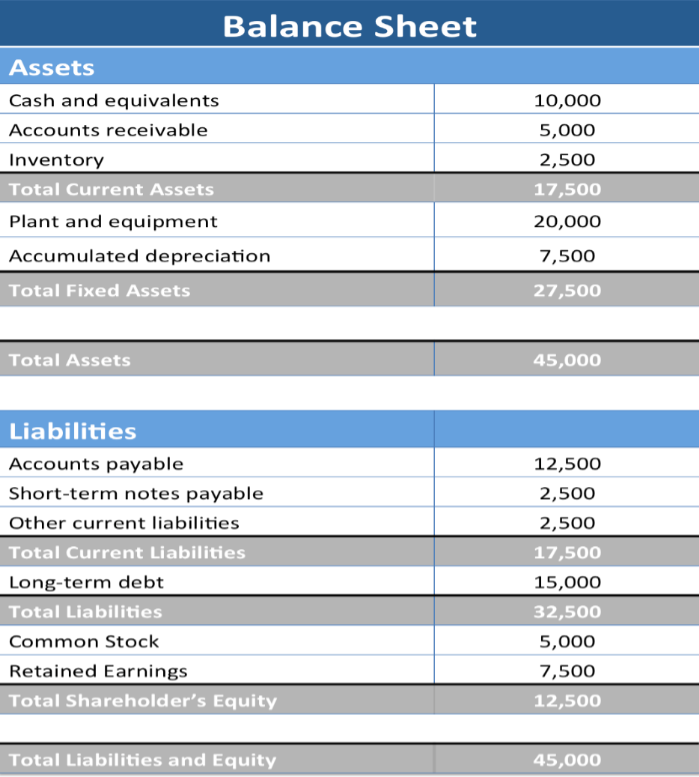
- Balance Sheet: A summary of a business’s financial position at a specific point in time, displaying assets, liabilities, and equity.
For a detailed balance sheet, visit: The Accounting Path.
Income Statement
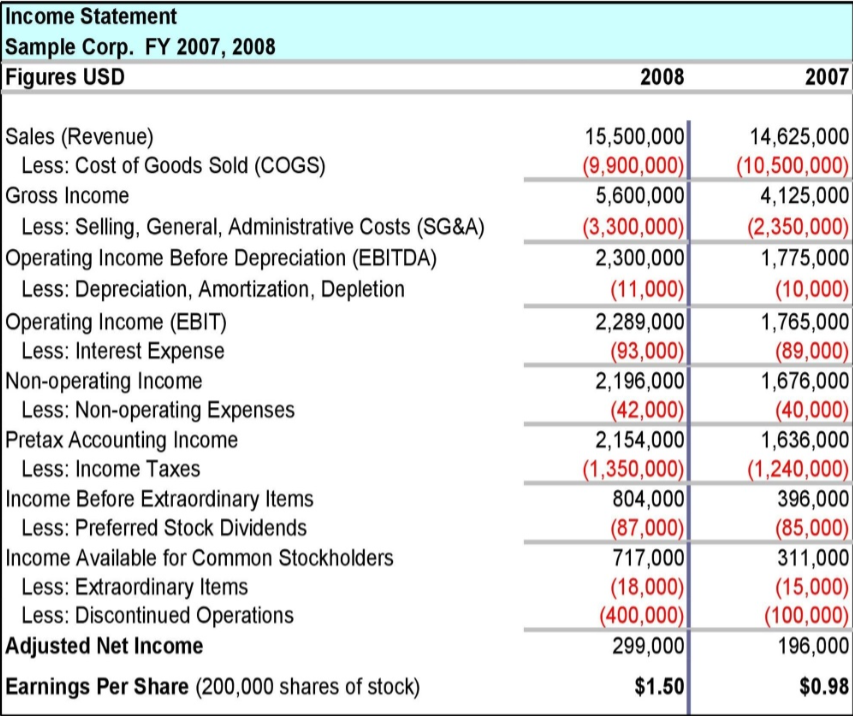
An income statement summarizes a company’s revenue, expenses, and profit or loss over a specific period. It illustrates how revenue is converted into net income or net profit.
Here is a pictorial representation of an income statement to provide a clearer understanding.
Cash Flow Statement
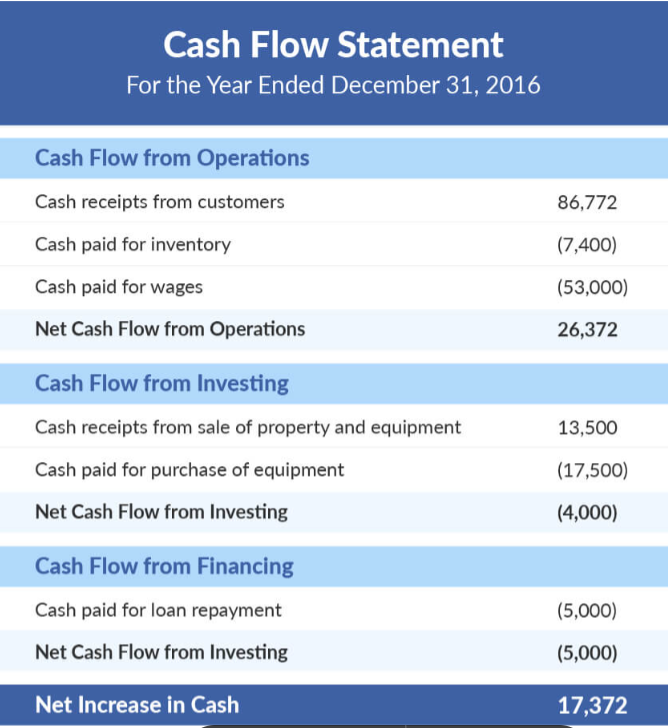
A cash flow statement tracks the inflow and outflow of cash within a business. It highlights the company’s liquidity and its ability to meet short-term obligations.
Here is an example of a cash flow statement.
4. Methods of Accounting
Accounting is a very important part of business. Choosing the right method of accounting is very important and can impact business in many ways. Here we will quickly discuss two main types of accounting: cash basis accounting and accrual basis accounting to let you decide which one best suits you.
Cash Basis Accounting
Cash basis accounting is a method where income and expenses are recorded only when cash is received or paid. Like if you invoice a client in March but receive payment in April, the income will be recorded in April. And also, if you purchase something in March but pay in April, the expenses will be recorded in April.
Cash basis accounting is very simple and easy to understand. It only focuses on cash flow, so it gives you a clear insight into how much money you currently have in hand. And it is also tax beneficial because income is only taxed when it’s received, so all these advantages make cash basis accounting very suitable for small businesses.
Accrual Basis Accounting
Accrual basis accounting records income and expenses when they are earned or incurred, regardless of when cash is exchanged. This ensures that revenues and expenses are recorded in the same accounting period, which is known as the matching principle. Unlike cash basis accounting, where if you invoice in March but receive payment in April, the income is recorded in April, accrual basis accounting records the payment in March.
Accrual basis accounting gives you a comprehensive financial picture, which is better for decision-making. It is investor-friendly because it provides a clear picture of financial performance.
In simple words, if you own a small business or a business that operates only on a cash-only basis, or you own a startup, then go for cash basis accounting. And accrual basis accounting is ideal for medium to large businesses with complex transactions, businesses that carry large inventory, and companies planning to scale or seek external funding.
Mastering Bookkeeping and Accounting
As you now already know about the basics of accounting and bookkeeping, we will move forward and try to explore how you can master bookkeeping and accounting to guarantee financial success.
Step 1: Set Up a Chart of Accounts
The first step is to set up a chart that includes a categorized list of financial transactions like:
- Assets (cash, inventory, equipment)
- Liabilities (loans, accounts payable)
- Revenue (sales, service income)
- Equity (owner’s equity, retained earnings)
- Expenses (rent, utilities, salaries)
You can also use accounting software like QuickBooks or Xero to automate this process and reduce errors.
Step 2: Record Every Transaction
The second step is to record every transaction, no matter how small, to make your records accurate. It can be any type of transaction like sales, invoices, purchases, expenses, etc.
Step 3: Reconcile Accounts Regularly
To maintain accurate and error-free records, make sure to reconcile accounts regularly. You can schedule weekly or monthly reconciliations to keep your records free of errors.
Step 4: Generate Financial Reports
Regularly generate financial reports because they provide insights into your business’s performance.
- To track your revenue, expenses, and net income, create a profit and loss statement.
- For a snapshot of your financial position, generate a balance sheet.
- To track the movement of cash, create a cash flow statement.
Step 5: Plan for Taxes
Make proper records of sales tax, payroll tax, income tax, deductions, and credits. Proper bookkeeping will help you during tax season. In order to avoid any kind of penalties and maximize deductions, I suggest hiring tax professionals like Alicloud Nexus.
Step 6: Analyze and Optimize
The final step is to carefully study your financial data to identify opportunities for improvement. Regularly analyze your financial performance to see:
- If there are any expenses you can decrease.
- If your cash flow is good.
- Which products generate the most profit.
I believe you have gained enough knowledge for today, so I will stop this blog here. Stay tuned for the next blog, where we will explore advanced financial tactics and how Alicloud Nexus may help you. See you soon!
Explore more about us
- Home – Visit our homepage for an overview of our offerings.
- About Us – Learn more about our team and mission.
- Our Services – Explore our comprehensive business solutions.
- Blogs – Stay updated with insights and industry trends.
- Contact Us – Get in touch for inquiries and consultations.
Contact Us Today for a Free Consultation!
Ready to take your business to the next level? Reach out to us for a free consultation and discover how we can help you achieve your goals.
📧 Email: admin@alicloudnexus.com
📞 Phone: +92 316 0862 596
LinkedIn: Explore AliCloud Nexus on LinkedIn
Follow us for industry insights and updates.
YouTube: Subscribe to AliCloud Nexus on YouTube
Explore our video library showcasing expertise and case studies.